PhD students

Our PhD programme is designed to attract the brightest scientific minds and is a fabulous opportunity for highly motivated and talented people to embark on their career in biomedical research.

2026 PhD recruitment is now open

Deadline is 12:00 midday (GMT) 17 March 2026

PhD student recruitment
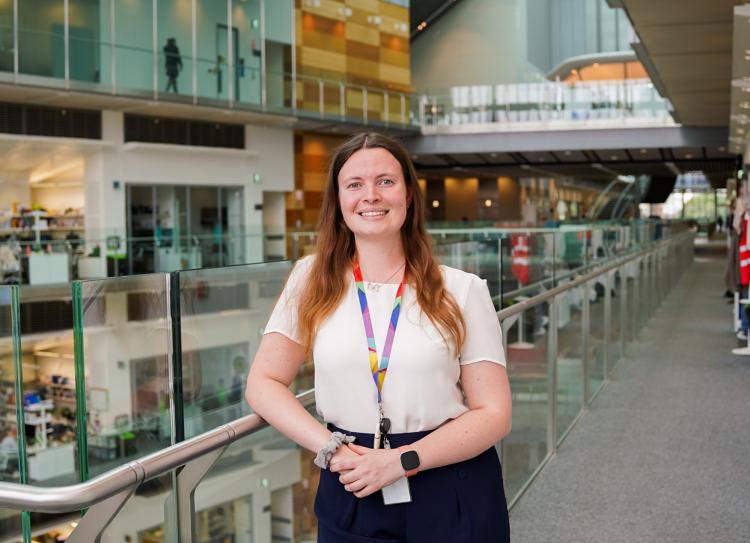
Students working in a collaboration space at the Crick.

Intro

Our PhD student community 

We have over 200 PhD students at the Crick who contribute to our international community, with around 60% coming from the EU and further afield. 

The energy and enthusiasm of the student population are a vital part of Crick's research community. Our students are fully engaged in the activities of the wider Crick committees, networks and forum, and run an active community group organising monthly social events and the annual Crick-Partner University PhD Student Symposium. 

The programme

The comprehensive Crick PhD programme ensures that, as well as developing skills as an independent research scientist, our students have strong career prospects in science.  

Students accepted onto the programme register with one of our partner universities. You will attend an induction week and follow a structured four-year programme, agreed with our partner universities.

Your progress will be monitored through a series of annual progression points, and you will be required to present your research each year.

An international and inclusive PhD programme

We are proud to be a diverse, open, international institute. We welcome and encourage candidates of all different backgrounds, identities, nationalities, and lived experiences to apply to our PhD programme.

Find out more about the Crick's Inclusion Strategy and our commitment to fostering a culture where everyone can thrive.

Programme table

Year 1

  • Month 3-4: project proposal and first year symposium 

  • Month 9: early stage assessment

Year 2

  • Month 18: mid-term review and second year talk series

  • Month 24: progress review

Year 3

  • Year 3 research seminar

  • Month 30: chalk talk and progress review

Year 4

  • Month 40 – 42: thesis writing training and thesis planning

  • Month 48: thesis submission and exit seminar

Quote

Florian Hubl

The Crick’s PhD programme gives you the chance to work under one roof with outstanding researchers in a collaborative, interdisciplinary and international environment. Progression points throughout the programme make sure you keep on track with your research and you receive valuable feedback from senior researchers.

Florian Hubl, PhD student, Li V Lab

Training

Throughout the PhD programme, you will receive tailored training on presenting and writing about your research, including specialised IT software training and workshops on talking about science to both scientific and non-specialist audiences.

We will also encourage you to make the most of the wide range of training courses available at the Crick, and to access the skills training programme within your university.

Attending scientific conferences provides valuable exposure to the wider scientific community, and is an exciting and important learning experience. You will have access to funding to allow you to present your work at national and international conferences and we encourage you to do so, particularly in the second half of your PhD.

Training

Collaboration quote

Amy Bowen

The level of scientific support and expertise is excellent, and is invaluable in helping research occur smoothly and efficiently. Through the PhD programme, I've had the opportunity to visit numerous other institutions in London and beyond, helping me to engage with the wider scientific community.

Amy Bowen, PhD student, Hadjivasiliou Lab

Student support and wellbeing

Carrying out a PhD can be challenging, but we have dedicated systems in place to ensure you have all the support and guidance you need during your studies. Our PhD students have access to a comprehensive support network involving their supervisor and research group, a dedicated thesis committee, our Academic Training team, which includes our Student Support and Development Lead, and the PhD student community itself, represented by the PhD Student Committee. Additional support is offered through wellbeing training sessions tailored for PhD students in each year of study, a PhD support group and our Employee Assistance Programme.

Support

Career development

We are committed to supporting our students in their professional development, and will encourage you to plan ahead in thinking about your future career.

To help with this we offer the following career development activities:

  • from second year onwards, a work placement programme (1-4 weeks) in collaboration with a variety of organisations
  • monthly careers talks and workshops delivered by speakers working in academia, industry research and a variety of science adjacent sectors
  • an alumni network that connects current and former Crick staff and students
  • a mentoring framework that allows participants to access advice and guidance from across the Crick community
  • a CV review and advice service
  • workshops on how to find postdoc positions and on careers beyond academia

Students also have full access to the careers services within their registered partner university

Support quote

Portrait photo of Sophie Kraunsoe

The Crick is an inspiring place to work - you have access to amazing facilities and expert colleagues to help push your science forward. PhD students progress through the programme as a cohort so you learn about research in many different areas and build a network of friends.

Sophie Kraunsoe, PhD student, Cardoso-Moreira Lab

Alumni career paths

Alumni career paths

After completing their PhD, our students continue to a range of different areas and industries based on their individual areas of interests. 

Nearly half of our PhD student alumni (48.1%) have continued to pursue a career in academia after completing the PhD programme taking up Postdoctoral Researcher and Research Scientist positions in institutions across the world. 

Our clinical research fellows and MB-PhD students return to their clinical career track after their PhD, often carrying out research in parallel with their clinical commitments.

42.5% of students have chosen pathways as scientists in pharmaceutical and biotech organisations or taken their experience into science related roles such as science consultancy, communication, policy or administration. Our next destination information here highlights the extensive skill-set gained during a PhD which can successfully be applied to many other career paths with students taking the skills from their PhD into a completely different areas for example, finding success in investment or events management. 

We’ve found that while typically the majority of students continue to remain in the UK (approximately 66%), Crick PhD alumni can be found pursuing careers in 16 countries around the world including the USA and Japan.
 

Career paths after the Crick

Meet our alumni

Clovis, Management Consultant at Boston Consulting Group 

“My time in the Crick really honed my problem-solving skills. From understanding a problem and coming up with hypotheses to testing and presenting them while maintaining a critical thinking mindset. The problems I apply it to now are very different but the underlying process is still very much the same.”

A man smiles at a camera

Tatiana, Clinical Trial Manager at Medpace

“As a joint PhD student between the Francis Crick Institute and Imperial College London, I had the unique opportunity to work at the interface of cancer biology and bioengineering. Collaborating closely with researchers from different disciplines taught me how to communicate across scientific boundaries and approach problems from multiple angles. The Crick’s highly collaborative environment, combined with access to world-class facilities and expertise, helped me develop transferable skills in project management, critical thinking, and attention to detail — all of which I now apply in my role as a Clinical Trial Manager at Medpace.”

A woman smiles at the camera

KangBo, Postdoctoral Researcher at Whitehead Institute (Cambridge, Massachusetts) 

“The PhD program at the Crick provided an exceptional environment to develop a broad range of computational and experimental skills, while also fostering expertise in project management and collaboration. Now, as a Postdoctoral Researcher at the Whitehead Institute, I integrate multidisciplinary approaches to investigate the molecular and cellular mechanisms that underlie germline immortality”
 

A man stares at the camera

Maryam, Research Fellow, UKDRI at UCL

"My PhD at the Crick gave me a valuable skillset spanning computational and wet lab techniques, and key connections that helped me secure an exciting post-doctoral position. I am now a Research Fellow at the UKDRI at UCL, studying how gut-derived signals shape neurodegenerative disease."

A woman smiles at the camera

Imke, Funding Manager at the Wellcome Trust

"During my PhD in molecular biology, I developed key transferable skills which have helped me in my role at the Wellcome Trust.

"My day-to-day role involves processing molecular biology and genetics grant applications, organising reviewers and interview committees, and acting as a point of contact for applicants and grant holders."

Imke Ensinck

Nana, Bioinformatician at Tagomics

"During my PhD, I was fortunate to develop skills in bioinformatics and statistics, collaborating with researchers across the globe to analyse genetic and epigenetic data from cancers.

"I’m now at Tagomics, a biotechnology company, which looks to accelerate disease understanding and diagnostics. I'm contributing my expertise to the development of a novel epigenetics assay."

Nana Mensah

Sign up for our newsletters

Join our mailing lists to receive updates about our latest research and to hear about our free public events and exhibitions.  If you would like to find out more about how we manage your personal information please see our privacy policy.