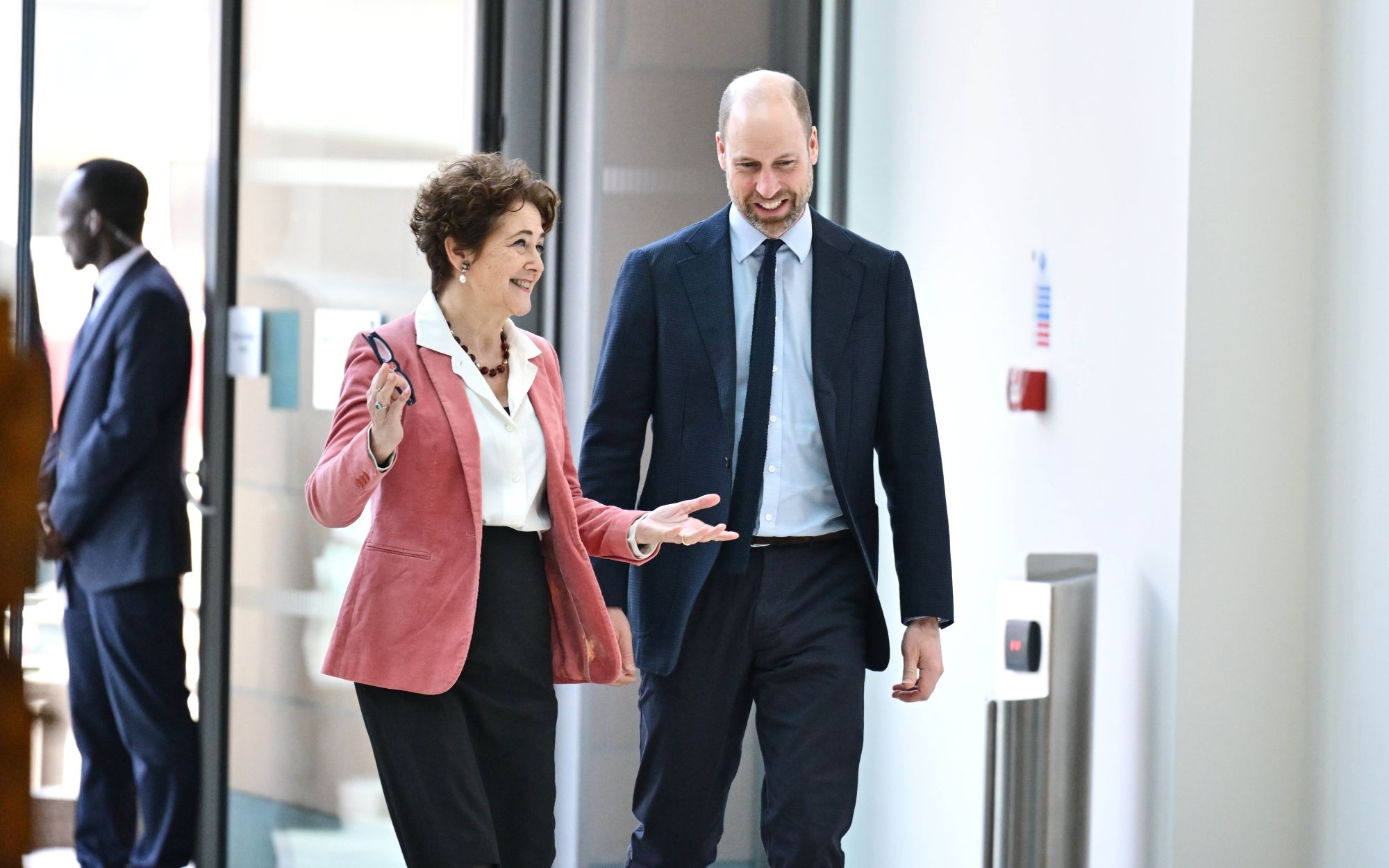
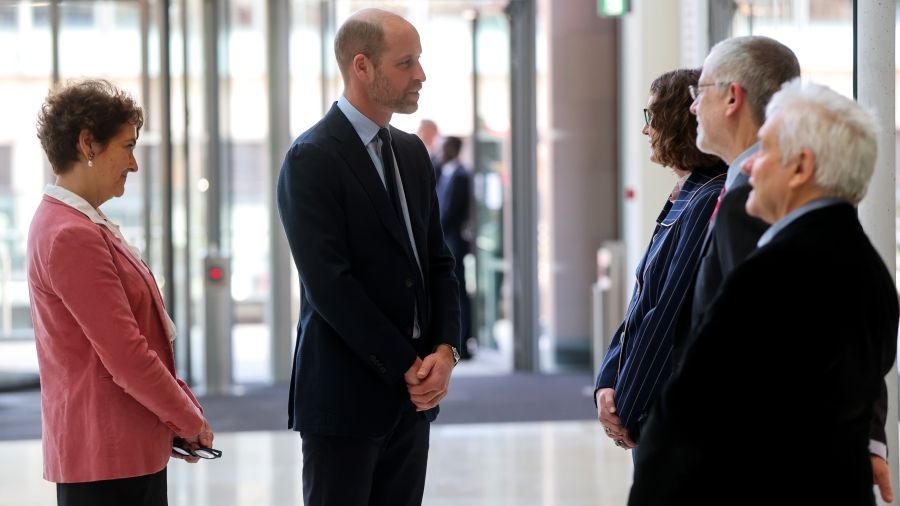
The Prince of Wales was greeted by Crick Director Edith Heard, Honorary Life President Paul Nurse, Chief Operating Officer Claire Hook and Director of Research, Richard Treisman.
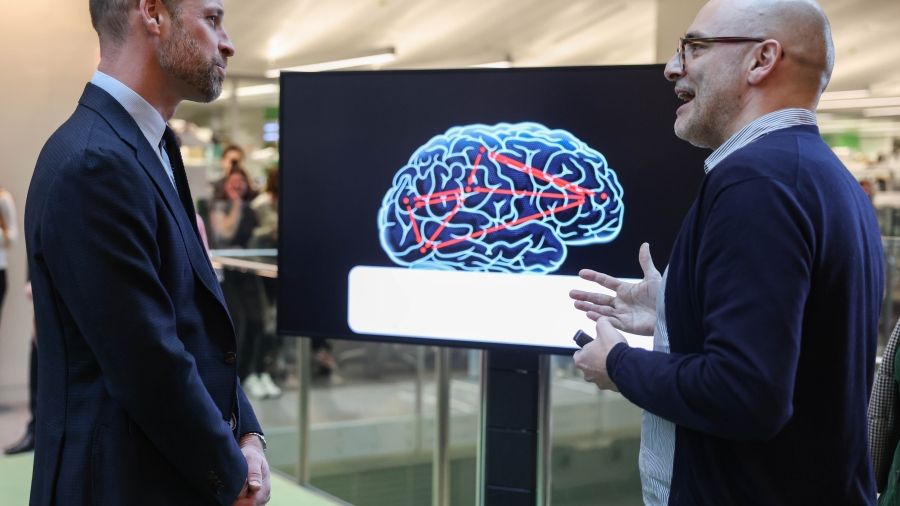
He was first introduced to Katharina Schmack and Andreas Schaefer, who lead teams of neuroscientists studying the vast complexities of the brain – from the billions of connections that influence the way we perceive the world around us, to the biological mechanisms that affect our mental health.
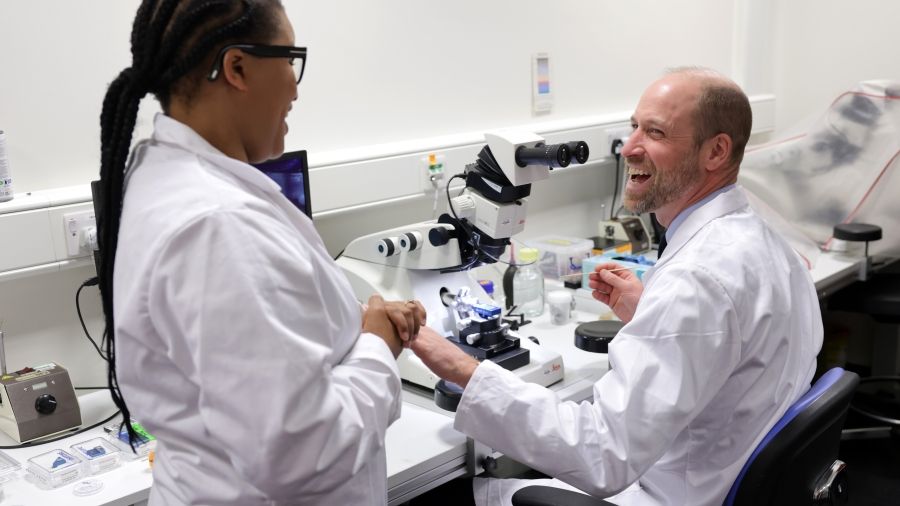
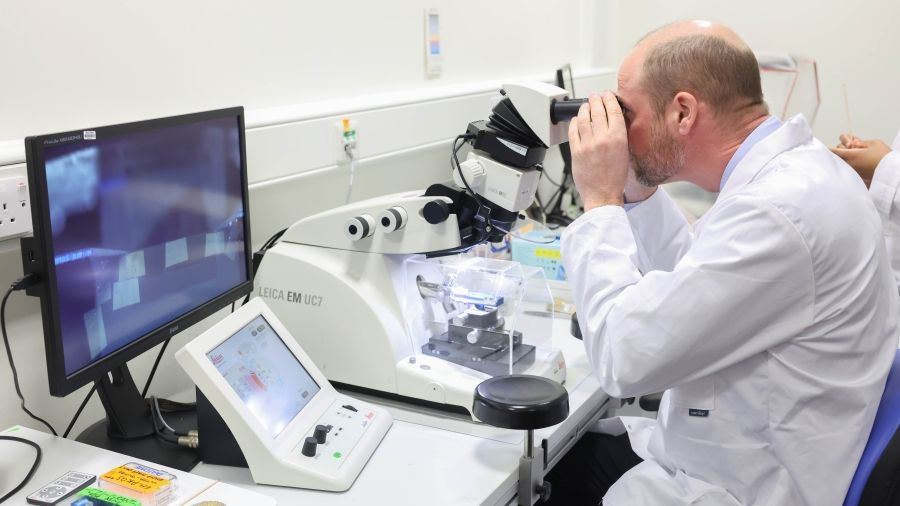
Prince William then met with Pippa Hawes and Dumisile Lumkwana to attempt a highly-specialised task: preparing a sample for imaging with an electron microscope. Electron beams are easily scattered, even when they hit air molecules, so the samples must be imaged in a vacuum. To achieve this, they are embedded in a plastic block for protection and then sliced thinly enough for electrons to pass through. The slices are around 100 nanometres – 1,000 times smaller than the width of a human hair. The only knife capable of cutting slices this thin is made from specially sharpened diamond and must be handled with a brush made from a single eyelash.
“Prince William’s engagement and interest in science and education was not only greatly appreciated by our entire community, but is a powerful affirmation of the value of biomedical research and innovation in delivering real benefits for society both in the UK and internationally.”
Chief Executive Officer
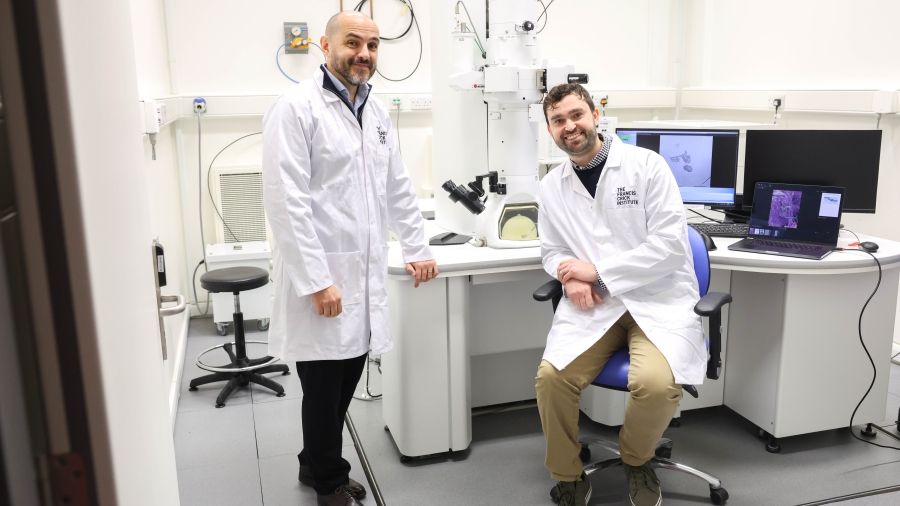
Advanced imaging plays a vital role in Crick discovery science, including helping researchers to find ways to tackle antimicrobial resistance. Cell biologists Max Gutierrez and Tony Fearns explained how their team examines what happens inside cells when they are infected Mycobacterium tuberculosis, the bacterium that causes TB.
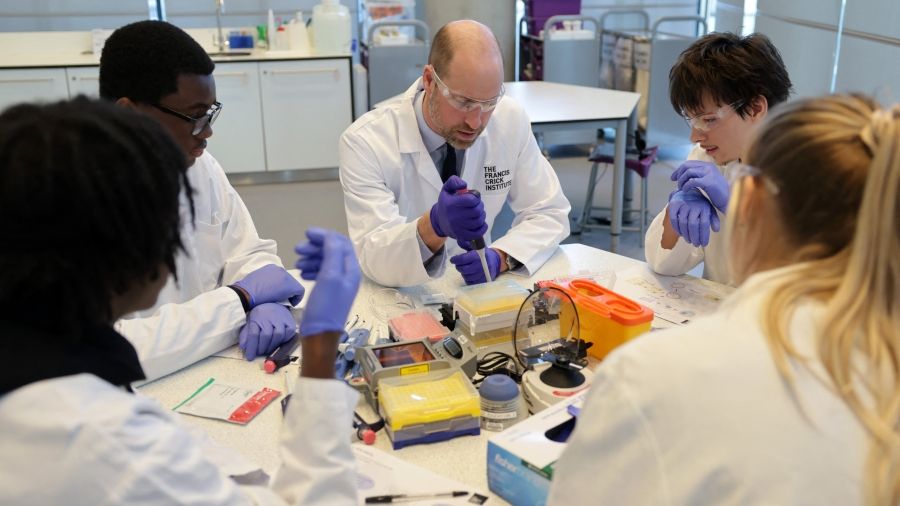
Prince William’s final stop was a visit the Crick’s dedicated teaching laboratory, where a group of A-Level students from William Ellis School in Camden were participating in a full-day genetic engineering workshop. The students demonstrated their newly acquired micropipetting skills and challenged His Royal Highness to try for himself.
Edith Heard, Director of the Crick, said: “It was an honour to welcome His Royal Highness to the Crick and reflect together on the role of scientists and evidence in addressing global challenges.
“Prince William’s engagement and interest in science and education was not only greatly appreciated by our entire community, but is a powerful affirmation of the value of biomedical research and innovation in delivering real benefits for society both in the UK and internationally.”