The Sjöberg Prize is awarded in partnership between the Royal Swedish Academy of Sciences and the Sjöberg Foundation and it is awarded to a person or persons who have made decisive contributions to cancer research.
“I hope this prize is going to allow us to really understand how that very first step in tumour initiation and evolution occurs. If we can understand that process, I hope we can intercept it and prevent it from happening and therefore prevent cancers from emerging.”
Deputy Clinical Director & Principal Group Leader
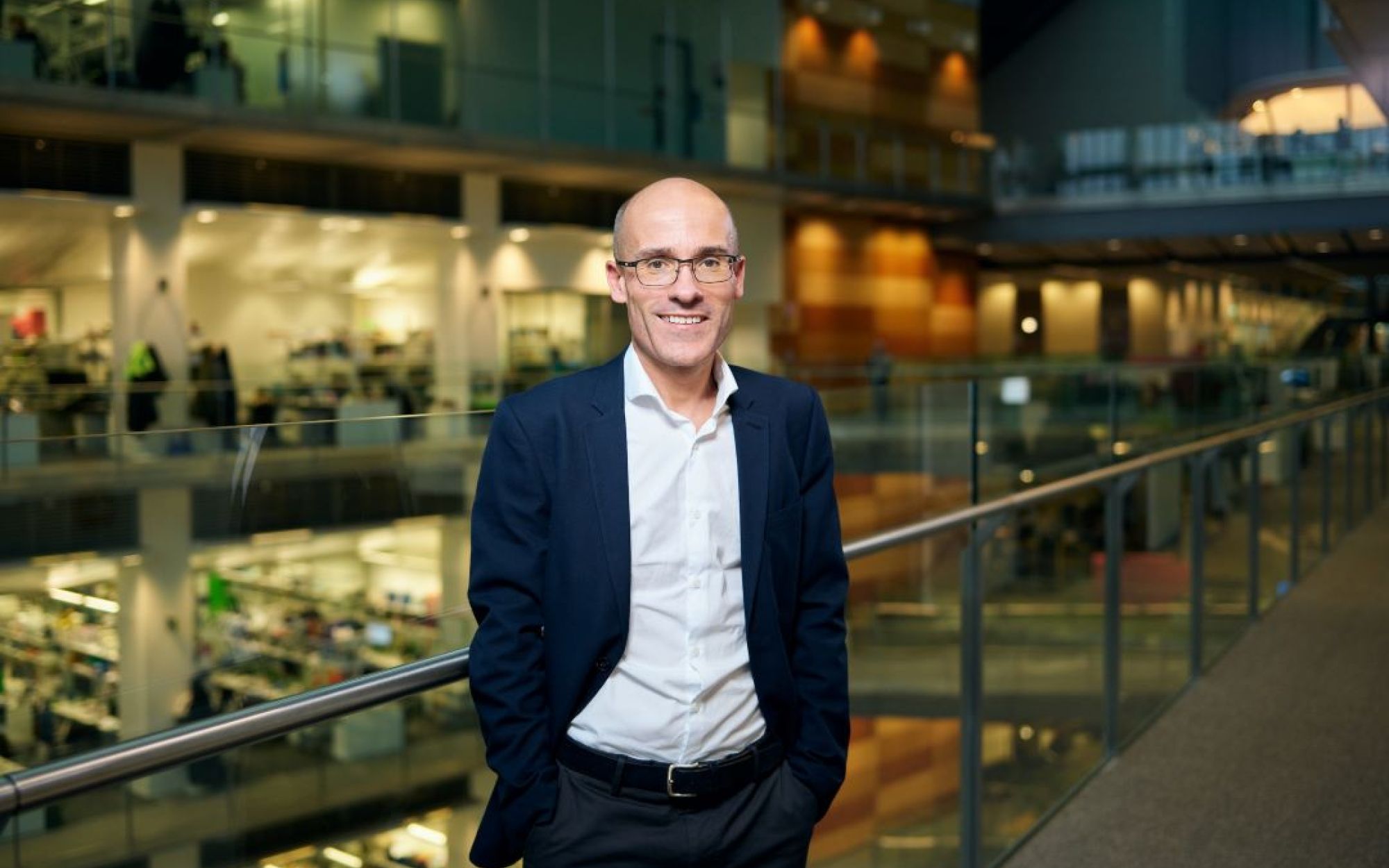
Charlie has been recognised for his contribution to the fundamental understanding of tumour evolution. As part of the Cancer Research UK funded TRACERx and TRACERx EVO studies, his team have traced the development of lung tumours from the point of diagnosis, to interrogate the biology behind disease evolution, drug resistance, cancer spread and immune evasion.
Thomas Perlman, Head of the Sjöberg Prize Committee and Member of the Royal Swedish Academy of Sciences, said: "Charles Swanton is a true pioneer in cancer evolution and has shown that the evolutionary principles observed in nature also operate in tumours. His research on the mutational processes underlying tumour development opened entirely new avenues for cancer researchers worldwide to identify novel diagnostic and therapeutical strategies and targets.”
Charlie and team have also pushed this work further, tracing cancer evolution back to the very beginning to look at why it occurs in the first place and if there may be ways to intervene before a tumour develops. His team recently revealed how the combination of naturally accumulating cancer-causing mutations and pollution-induced inflammation can trigger cells to grow uncontrollably, forming tumours.
Charlie intends to use the prize to further his lab’s research into the earliest stages of cancer initiation. “I hope this prize is going to allow us to really understand how that very first step in tumour initiation and evolution occurs. If we can understand that process, I hope we can intercept it and prevent it from happening and therefore prevent cancers from emerging,” he says.
Charlie is Chief Clinician at Cancer Research UK, Chair in Personalised Medicine at UCL and Consultant Oncologist at University College London Hospitals NHS Foundation Trust.